What I Learned About the Father Wound When My Dad Came to Visit
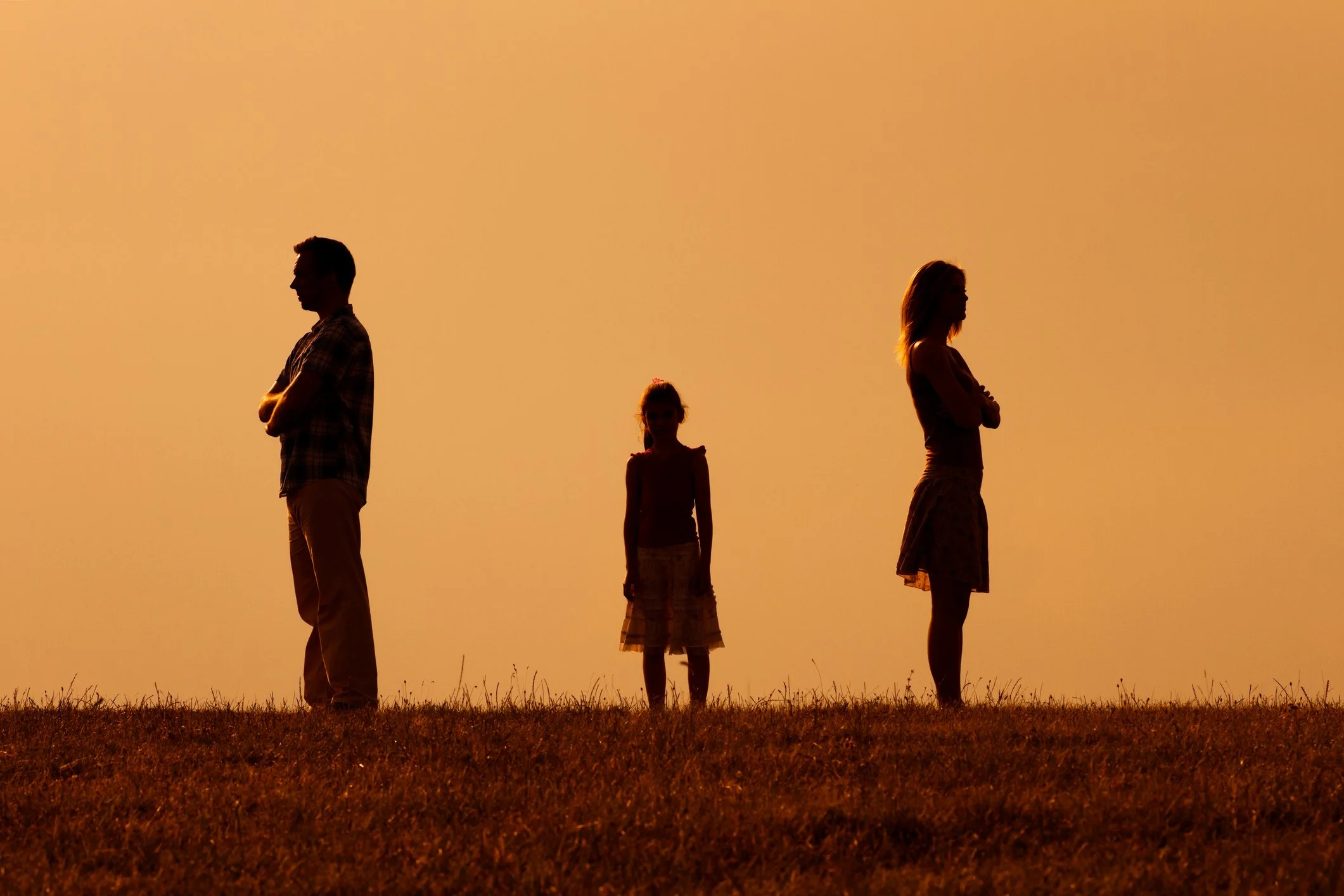
A young child stands between two emotionally distant parents facing away from one another, representing the Father Wound, childhood emotional neglect, family dysfunction, and the generational patterns that can shape adult relationships, nervous system regulation, self-worth, and abundance.
I’ve long known that I carried a Mother wound. My childhood was riddled with childhood emotional neglect, with physically present parents who ensured we had the basic necessities in life, but essentially left us up to our own to raise ourselves. And while my father was easily the parent I was closest to, he provided inconsistent emotional connection. Praise and attention were essentially given only when exceptional achievement was attained - it is no doubt that I also developed a Father Wound.
It hasn’t been until the past few months, the time before last when my Dad came to visit that I finally saw a mirror of my own Father Wound.
And in the weeks that followed, I thought I understood that wound.
I knew the stories; I understood what happened.
I knew what I didn't receive as a child and how it formed as a result.
And I loosely saw the generational strings that led to my Dad’s own Father Wound that lie at the root of it.
I understood how some of it had followed me into adulthood. Into relationships. Into my subconscious need to prove myself. In the repeating patterns that had surfaced of over-giving and over-functioning. Subconscious attempts to repeatedly seek safety. And, into the many places over the years where I have looked for love from people who weren’t fully available to give it.
I thought I had done a pretty good job connecting the dots.
But, then my Dad came to visit.
And the rubber met the road so to speak and reality hit me in a way I hadn’t seen things before.
I realized that while I understood the story of my father wound, I had not fully understood the adaptation.
And those are two very different things.
Because the wound isn’t only what happened to you.
The wound is also who you learned to become because of what happened to you.
And that one landed differently.
Because when my Dad came to visit, I didn’t just remember my childhood.
I watched it show up in my body and in my slipping into all too familiar patterning. Because our body and our intuition will always show emotion before it lands fully in our mind.
There is something fascinating about being a grown woman, in your own home, with your own partner and children, and suddenly noticing an old version of yourself awaken.
I could feel it.
I was more activated…more easily triggered.
More aware of everyone’s moods.
More likely to anticipate what someone needed.
More likely to over function and step in and fix something. Smooth things over. Micromanage everyone else’s needs.
And I started to observe and watch myself do it.
There she is.
The little girl who learned to read the room.
The little girl who learned to handle things.
The little girl who learned that being capable was useful.
The little girl who figured out that sometimes the easiest way to create safety was to simply take care of everything herself.
That changed the way I think about triggers.
We tend to think being triggered means we haven’t healed enough.
I don’t think that’s always true.
Sometimes a trigger is a flashlight.
It shows you exactly where your body is still living by an old rule.
My dad’s visit illuminated some of mine.
The Things That Were Never Mine to Carry
One of the hardest things I saw during this visit was how naturally I stepped back into responsibilities that were never mine to begin with.
Paying for things. Taking care of things. Fixing things. Anticipating what might be needed. Absorbing consequences that didn’t actually belong to me.
And there was something almost automatic and instinctual about it.
That’s the strange thing about these patterns.
They are rooted in familiarity and lie deep within our subconscious.
And they are tethered to lies about survival that we adaptively created and clung onto to keep us safe when we created them. Stories such as:
If I take care of this, everything will be okay.
If I handle it, there won’t be conflict.
If I absorb the cost or inconvenience, nobody else has to be uncomfortable.
But at some point I had to ask myself:
Why am I still paying emotional bills that were never mine to begin with?
What have I been paying for all these years with my time? My energy? My nervous system? My peace? My relationships?
How many things have I taken responsibility for simply because I was capable of handling them? Or, because it was simply expected?
And when did being capable somehow become the same thing as being responsible?
It isn’t.
That may be one of the biggest lessons I’m taking from this.
Just because I can carry something doesn’t mean it belongs to me.
Then I Saw His Adaptation Too
This is where the whole lesson became even more interesting.
Because I wasn’t only watching my own pattern.
I was also watching his.
Because he mirrored it back to me, just in a different adaptive form.
And that helped me to see the larger ancestral root.
It didn’t begin with me.
And I know enough about his father and their dynamic to know it came before both of them and was passed down.
Where I learned to move toward discomfort and manage it, to find my own sense of safety, he learned to move away from it, and avoid.
I move toward it; he moves away.
Same family system; different survival strategy and adaptation.
And I was shown this very clearly in events that happened while he was here.
Different Adaptations. Same Wound.
His avoidance didn’t exist in isolation.
It created a gap.
And somewhere along the way, I became very good at filling gaps.
He moves away from discomfort; I move toward it.
He leaves something unresolved; I instinctively move in to translate it, smooth it over, pay for it, fix it or absorb it in some way.
The immediate crisis passes and everyone gets temporary relief.
And the system learns through reinforcement, that this works.
Except, that it doesn’t.
It just keeps moving the discomfort from one person to another.
His avoidance protects him from facing what is difficult.
My over-functioning protects him from experiencing some of the consequences of avoiding it. And, it makes me feel safe….comfortable, and able to avoid my own maladaptive patterns and how I self abandon.
And that realization was uncomfortable.
Because let’s be honest - over-functioning can look incredibly virtuous. It nauseatingly fits the “good girl” stereotype I have been conditioned my entire life to fit into.
I’m helping.
I’m generous.
I’m responsible.
I’m kind.
I’m keeping the peace.
I’m taking care of everyone.
But sometimes “helping” is how we unknowingly participate in the very pattern we are trying to heal.
That doesn’t mean I caused or am responsible for his behavior.
His choices belong to him.
But, it means I can finally see the loop: He leaves responsibility unattended. I pick it up. And, once I do, he has less reason to come back for it.
The more I compensate, the less visible the original absence becomes. And eventually everyone starts treating the arrangement like it’s somehow normal. All of my effort towards healing and more authenticity within myself suddenly dim and go out the window, because I unknowingly abandon myself and self-sabotage the moment I self-subjugate my own needs to instinctively meet the gap in my Dad’s patterning.
This Is How Ancestral Patterns Hide
I used to think generational healing meant identifying what our parents did wrong and making sure we didn’t do the same thing.
I think it’s far more subtle than that.
Because while I may never repeat my father’s exact behavior, I can still repeat the system.
He avoids.
I compensate.
He under-functions.
I over-function.
He leaves something uncomfortable sitting there.
I rush toward it to clean it up.
Different behavior; same dance.
And if I want the dance to end, I have to stop dancing my part.
That doesn’t mean forcing him to dance differently.
It means I stop making his part easier by automatically performing mine.
Sometimes the most loving thing you can do is leave the responsibility exactly where it belongs.
Not angrily.
Not as punishment.
Just: This is yours.
I don’t need to feel the compensatory need to pick it up and make things comfortable.
The Father Wound Is Sneakier Than I Thought
We hear “father wound” and immediately think about relationships.
Daddy issues. Unavailable men. Abandonment.
And yes, it can absolutely show up there.
But I think that’s only one branch of a much bigger tree.
It can also show up in money. Work. Boundaries. Our Health. Generosity, or lack there of. Control. Success. Rest.
Our ability to receive.
Our need to be understood.
Our reaction to disappointment.
Even our ability to tolerate a peaceful, stable life.
I started looking at seemingly unrelated patterns and getting curious:
What if these aren’t unrelated at all?
The unavailable man. The money you can make but somehow struggle to hold. The opportunity you get close to and then pull away from. The boundary you abandon because someone is unhappy with it. The need to explain yourself until someone finally understands you. The constant proving. The extreme discomfort in asking for help. The need to control (on some level) the outcome. The attraction to people you have to “win over”. The discomfort with receiving. The next level you keep getting close to and somehow pulling yourself back from.
Different branches, same root.
Am I safe if I stop working for love?
That question stopped me.
We Call Survival Strategies Personality
Some of the things we think are simply “who we are” may have started much earlier in life, as adaptations.
Fierce independence can grow from learning that depending on people doesn’t feel safe.
Achievement can become a way to secure approval.
Generosity can come from a genuinely generous heart.
But generosity can also become entangled with worth.
If I give enough, will you stay?
If I make your life easier, will I matter?
If I take care of you, will you take care of me?
And the opposite can happen too.
Someone can become guarded with money, affection or resources because giving feels like losing.
Underneath it can be a completely different fear:
If I give this away, will there still be enough for me?
That doesn’t mean generosity or stinginess automatically comes from a father wound.
But it made me look at generosity differently.
Healthy generosity requires something deeper than giving.
It requires “enoughness”; the understanding that I have enough, and am enough.
That is very different from giving because somewhere inside you’re still trying to earn your seat at the table.
The Nervous System Remembers
This may be the deepest part of the wound.
You can understand your childhood intellectually and still have your body react to it.
You can forgive someone and still feel your shoulders tighten when the wound re-triggers.
You can know you’re safe and still start subconsciously scanning the room.
You can have enough money and still feel deep scarcity.
You can be genuinely loved and still anticipate abandonment.
You can rest and still feel like you should be doing something.
Because your body learned these patterns before you had language for them.
A child doesn’t think:
My caregiver is emotionally unavailable, therefore I need to develop a strategy for maintaining connection.
A child thinks:
What do I have to do to stay connected and safe?
And then she does it.
Over and over. Until eventually, it stops feeling like something she does. It feels innate.
That’s why healing cannot only happen through understanding. Root healing is never fully intellectual.
This is why talk therapy misses the mark so often, because its incomplete.
The nervous system needs new evidence.
I can say no and still be loved.
Someone can be disappointed in me and I can survive it.
I can rest and nothing falls apart.
I can let another adult solve their own problem.
I can receive something without immediately figuring out how to repay it.
I can let someone misunderstand me.
I can stop explaining.
I can choose the person who chooses me.
I can experience peace without waiting for something to go wrong.
I can find joy, passion, and abundance in the calm waters of everyday life without needing intensity to feel my own vitality.
And Then There Is Abundance
This connection surprised me. We often talk about abundance like it’s a mindset.
Think positively.
Visualize.
Manifest.
Set Intentions.
Believe you’re worthy.
But what if abundance is also about capacity?
Can I hold something good without immediately feeding a fear of losing it?
Can I receive more without sabotaging it?
Can I hold money without gripping it?
Can I give money without fear?
Can I enjoy success without immediately creating another mountain to climb?
Can I receive help without feeling weak or unsettled?
Can I enjoy what I already have?
Can I find pleasure in peace and stability?
Can I let life be good?
That last question is enormous: Can I let life be good?
Because when your nervous system has been organized around anticipation, struggle can feel strangely familiar.
You know exactly what to do with struggle. Fix. Work. Anticipate. Manage. Prove. Survive.
Abundance asks something completely different.
It asks you to receive.
And receiving can feel incredibly vulnerable when you have spent your life surviving through doing.
Maybe some abundance blocks aren’t simply about believing we deserve more.
Maybe we also need to learn that it is safe to hold more.
And Then There Are Relationships
This is where the pattern can get painfully real.
Because we don’t always choose what is healthiest.
We often gravitate toward what feels familiar.
And familiar is not the same thing as safe or prudent.
If love once involved unpredictability, unpredictability can feel charged and alive.
If attention had to be earned, pursuit can actually feel genuinely romantic.
And if connection came and went, consistency can almost feel boring.
So sometimes through well-meaning adaptation, we learn call nervous system activation chemistry.
We call longing love.
We call uncertainty depth.
We call trying to finally get an unavailable person to choose us fate.
But underneath all of that may be a much older question:
Can I finally get a different ending this time?
That question has humbled me.
Because sometimes we aren’t only chasing the person in front of us.
We’re chasing resolution.
Trying to finally win today what we couldn’t win then.
Trying to get someone unavailable to become available.
Trying to prove that this time we are lovable enough to be chosen.
But no adult relationship can travel backward and rewrite our childhood.
That is the work we must do in ourselves.
So What Does Healing Actually Look Like?
For me, it is becoming much less dramatic.
Healing happens in tiny moments.
I notice the urge to over-explain.
And I pause and choose not to.
I notice myself trying to manage someone’s reaction.
And I choose space and step back and don’t entangle.
I notice myself wanting to chase clarity.
And I pause and remind myself of the pattern to seek security in the outcome, and make peace with uncertainty.
I notice the small ways I give out of balance because I deeply value connection.
And I interrupt the pattern and sit with genuine curiosity about my feelings and intention.
I notice myself taking responsibility for something that isn’t mine.
And I pause and put it back down.
I notice myself abandoning what I need because someone else might not like it.
And I stay. I choose to stay with myself.
Maybe that is the deepest healing of all.
Because somewhere along the way, I learned that maintaining connection sometimes required abandoning myself.
Healing teaches me something different.
I don’t have to abandon myself to keep love anymore.
I can love someone and let them carry their own weight.
I can love my father and recognize what his avoidance created in me.
I can have compassion for why he became that way without continuing to organize my life around it.
I can stop compensating without becoming cruel.
I can stop rescuing without abandoning anyone.
I can let discomfort belong to the person who created it.
I can put down what was never mine.
And somehow, I feel grateful
This is perhaps the strangest part.
Healing my father wound does not require me to make my father a villain.
I see him more clearly now.
I see the things he carried.
I see his adaptations.
I see how he moves away from discomfort.
And I can imagine that once upon a time, those adaptations probably protected him too.
He had parents.
They had parents.
And they had parents.
Pain moves through families quietly.
So does avoidance.
Scarcity.
Silence.
Over-functioning.
Emotional absence.
The belief that love has to be earned.
We inherit things nobody ever names.
Until somebody finally does.
And maybe that is what generational healing really is.
Not standing at the end of a bloodline pointing backward in blame.
But standing in the middle of it and saying:
I see it.
I see what happened.
I see what it created in you.
I see what it created in me.
I can love you without continuing it.
And it ends differently with me.
My Dad came to visit and unknowingly gave me another gift.
He showed me where my body still remembered.
He showed me his adaptation.
And in watching his, I finally understood my own.
The little girl who learned to carry everything wasn’t weak.
She was incredibly resourceful.
She figured out how to survive the emotional world she was given.
She became strong.
Capable.
Generous.
Responsible.
She got me here.
But healing isn’t proving how much more she can carry.
Healing is finally becoming discerning enough to ask:
Is this actually mine?
And when the answer is no—
Learning to put it down.
Learning to love without carrying.
Learning to give without disappearing.
And learning to freely receive.
I can have boundaries without explaining them to death.
I can allow other people to experience the natural consequences of their choices.
I can choose relationships where love doesn’t have to be won.
I can teach my body that peace is safe.
And I can give my children something different.
Not perfection but something much more important.
A mother who is willing to look at what was handed to her before she unconsciously hands it to them.
And for that awareness, I am deeply grateful.
My father gave me life.
He gave me things I treasure.
But he gave me wounds too.
And strangely, even those wounds have become teachers.
Because they led me here; to awareness, to compassion, and to choice.
And maybe that’s the gift hidden inside all of this:
We don’t get to choose what was handed to us.
But we absolutely get to chose what we hand forward.
So I keep the love. I will keep the lessons. And, I will keep the strength.
But the things that were never mine to carry?
Those I can finally put down.
And maybe that is how a generational pattern ends.
Not with hatred or blame, but with awareness, responsibility, and love.
With one person finally deciding: This stops with me.
For that lesson Dad - thank you.
With Much Love Along Your Own Journey,
Seraph
xoxo

The Art of Staying Series - Part 2: Regulation vs. Escapism
She looked calm.
But the nervous system doesn’t measure healing by appearances.
Some forms of escapism are socially rewarded.
Overworking. Overperforming. Staying “fine”.
Keeping busy enough to never have to feel what’s underneath it all.
The hardest part?
Relief can feel almost identical to healing when your body has spent years surviving.
The Art of Staying, Part 2:
Regulation vs. Dissociation - Why Feeling Calm Isn’t Always Healing.
Why Feeling Calm Isn’t Always A Sign of Healing
We tend to imagine and “box in” escapism into obvious forms. Addiction. Alcohol. Drugs. Self-destruction.
But some of the most normalized forms of escapism are the ones that get societally and socially praised.
Overworking.
Overperforming.
Chronic Productivity.
Constant Scrolling & other forms of distraction.
Spiritual Bypassing.
People Pleasing.
Staying “Positive”.
Never slowing down long enough to fully feel what is actually happening inside of us.
And the hardest part is that many of these behaviors do create temporary relief. They alter our emotional state. They help us avoid emotions like discomfort, uncertainty, shame, emptiness, or fear.
Which means that the nervous system can start confusing relief with healing.
But relief and healing are not always the same thing.
Because healing reconnects you to yourself.
Escapism disconnects you from yourself - even when it looks functional from the outside.
Trust me, I became a pro at this. I looked and functioned like I was highly successful for most of my life. Yet inwardly, I was disconnected, deeply unhealthy, unfulfilled, and often struggling with my own identity and dissatisfaction with my life.
A person can be highly productive and deeply dissociated.
Highly spiritual and emotionally avoidant.
Highly self-aware and still terrified of stillness.
Highly “calm” while completely disconnected from their own needs, grief, exhaustion, or truth.
Not all “peace” is peace.
Sometimes its self-abandonment that became adaptive.
Sometimes its a nervous system that learned authenticity was unsafe.
And this is often where nervous system regulation gets misunderstood.
True regulation is not becoming emotionless.
It’s not never getting triggered. It’s not being endlessly agreeable, detached, or unbothered. Regulation is the root that opposes all of this. Because it is tied to living authentically. It is the ability to remain connected to yourself while experiencing emotion - without abandoning your body, suppressing your truth, or escaping into compulsive coping mechanisms every time discomfort appears.
Because eventually, the body keeps score of the avoidance.
Because when there’s chronic incongruence - when your outer self and your inner self split apart long enough - the nervous system often pays for it. The body has to expend energy maintaining suppression, monitoring reactions, scanning for danger, and controlling expression. Over time, that can contribute to chronic stress physiology, emotional dysregulation, shutdown states, anxiety, and chronic dissociation patterns. Because your nervous system was never designed to carry years of suppressed emotion, unmet needs, and chronic overstimulation without consequence.
And often, people don’t realize that all of this is happening because the behaviors protecting them are the same behaviors helping them function.
That’s why learning to recognize escapism matters. It matters deeply. Not from a place of shame, but rather from deep honesty. Because you cannot heal patterns you refuse to acknowledge and are still calling personality traits.
Sometimes escapism looks like:
scrolling because silence feels uncomfortable
staying busy so grief can’t catch up
chasing intensity because stillness feels boring or unsafe
fantasizing instead of taking action
consuming endless self-help content without embodiment
hyper-independence to avoid vulnerability
people pleasing to avoid rejection
emotional detachment disguised as “protecting your peace”
living in future potential and planning instead of present reality and full presence
needing constant stimulation of some sort to avoid sitting with yourself
The question isn’t whether we’ve ever escaped.
Most humans do.
The real question is:
Why are we trying so hard not to feel?
And what would happen if we stopped abandoning ourselves every time discomfort appeared?
Because eventually, you reach a point where you realize the problem was never simply your habits.
It was the relationship your nervous system had with safety, connection, intimacy, discomfort, and self-trust.
Many of us were conditioned to feel more chemically alive in chaos than in peace. I see this so often in my foster kids with trauma. They are more drawn to intensity than to consistency. More activated by the chase than by steady connection. And when that becomes familiar enough, calm can start feeling empty. Presence can be uncomfortable. Stability can feel emotionally “flat” simply because the nervous system was trained to associate unpredictability with aliveness.
Which means that healing is not just learning to stop the behavior. It’s learning how to stop needing the escape in the first place.
That requires more than awareness.
More than mindset.
More than consuming endless content about healing while staying trapped in the same cycles underneath it.
It requires teaching the body that safety does not have to be earned through performance, hypervigilance, emotional self-abandonment, or constant stimulation.
And that is where we’re going next.
Part 3 of The Art of Staying is not just about the why behind these patterns, but the how. How to stop chasing the spike. How to begin feeling safe in steady, healthy connection. How to recognize when your nervous system is pulling you toward familiar chaos instead of genuine alignment. And most importantly, how to start rewiring these patterns at the nervous system level so you can build a life that no longer requires escaping from. One in which you reconnect with your joy, your purpose, and your authenticity.
Until then, wishing you much love and joy along your journey,
Seraph

The Art of Staying: Part 1A Companion Essay- Why You Mistake Intensity for Connection
Real connection doesn’t live in the space between hands.
It lives in what actually meets.
And anything that keeps you reaching is asking you to look at why you’re not receiving.
Dopamine, Craving, and the Nervous System (And How to Break the Pattern)
Its taken me a few decades, but I finally noticed a pattern in myself that somehow had flown under the radar for years. And it’s not unique to me. I’ve noticed similar patterns in friends and clients.
Close 1:1 relationships with other people have often missed the mark for me. Don’t get me wrong, I have several close friends and have been/am in partnership. I always feel like I’m open, relatable, and real and couldn’t seem to put my finger on why that area of my life always seemed less alive, or amiss, to me. Then I started deeper shadow work, paid closer attention to my attachment patterns and subtle responses, and did some deeper research. My pattern with this comes from a combination of so many factors (childhood wounding, conditioning, inherent soul lessons you can see throughout my chart, and adaptation/survival coping strategies that often run on autopilot subconsciously). But, this past week, a medical astrology course I’m taking gave me another interesting piece of the missing puzzle.
About why some of us don’t feel comfortable, or truly lit up, in calm, steady, healthy connection. And instead, feel pulled towards things, or people, that are a little inconsistent, a little less clear…and perhaps more intense or exciting in some way.
And I believe, that like me, the answer to this for others struggling with similar experiences, is partly biological and partly related to patterns, that we created and started years ago, in childhood.
When a child’s connection with a primary caregiver felt unpredictable, emotionally distant, conditional, or something you head to learn to read and adjust to, it alters your ability to form healthy connection. You slip into adaptation and survival mode and learn to stay connected the best way that you can. But often with subconscious gate keeping patterns intended to keep you safe, but limit your vulnerability, authenticity, and deeper connection with others. And even, with yourself.
Your awareness becomes heightened when you are with others.
Energetically attuned.
And, you notice shifts quickly.
You learn how to feel when something is off.
And, before you realize it, your brain begins to wire and establish that connection isn’t something you just receive or co-create, but something that you have to stay vigilant and on top of. In other words, something you have to control in some way.
So later in life, when something feels calm, steady, and easy, it doesn’t always register as “safe”. In fact, sometimes it feels quite the opposite.
Quiet.
Less than thrilling.
Sometimes even registering as “off” or uncomfortable because it feels foreign.
And that can make you self abandon, escape, or otherwise feel less than fully checked in, engaged, and present.
Sometimes it can even make you reject healthy connection all together.
But, when something new comes in that feels a little inconsistent?
When there is that subconscious pull…then distance…then pull again?
Well that old, familiar pattern gets your attention immediately.
Because it makes you feel something that feels familiar on some level.
Alive. Focused. Engaged. And often both oddly thrilling and comfortably familiar at the same time.
And this is the pattern that I’ve recently identified and looked at more closely - in myself, friends, and even others who I have read charts for.
Because there is a reason that this happens. Its not just conjecture.
And, its not simply trauma bonding or emotional either.
Its biological and there is real science to back it up.
Our brains are wired to respond really strongly to uncertainty.
Its a survival mechanism and its tied to one of the most primal parts of our brain.
Dopamine - the excitatory neurotransmitter tied to motivation and reward - doesn’t spike most when something is secure.
It spikes when something is just out of reach.
When its unclear.
When it might happen….but might not.
So when connection feels intermittent, almost like a chase:
attention —> distance —> attention again…
your system locks in.
Not necessarily to the person, but to the pattern.
Because familiar patterns, unless recognized, broken, and rewired, feel ultimately more comfortable and safe.
Because again, if you learned any kind of maladaptive attachment as a child (emotional neglect, abuse, mother wounding, etc) that taught you that connection is conditional, unstable, and requires effort or hyperawareness…
this pattern can feel strangely familiar.
Even if you know intellectually that it isn’t healthy.
And the craziest part of this I recently learned in a medical astrology class is that each of the elements are associated with a neurotransmitter which can be imbalanced when there is an elemental imbalance. And for fire, this is dopamine. Which makes sense anectodotally with what I have seen in practice.
That natural drive to move toward something, to engage, to pursue, to feel.
It’s a beautiful initiatory energy.
But, if its not grounded in a deeply rooted and healthy sense of self-worth, it can easily slip into chasing something just to feel the activation of it.
And this is where it gets a little bit uncomfortable to admit - sometimes what we call “connection” is just activation.
That heightened state of thinking about something, feeling it, trying to understand it, and wanting to get back to it.
And because it feels strong and intense - we assume it’s meaningful.
But strong doesn’t always mean healthy and authentic.
I’ve also been noticing how this shows up beyond just romantic interest.
Friendships.
Work patterns.
Even how we respond to simple things, like, people being kind to us.
If you are used to earning connection….genuine kindness can feel almost confusing.
Even threatening or suspicious.
You question motives.
Or it just doesn’t land as authentic and deep.
Because there is no tension attached to it.
And it feels different than the pattern you are used to.
And its in these small micro reflections that we start to see the larger pattern more clearly.
This isn’t just about who we’re connecting with.
Its about how we relate to connection itself.
There’s also this other layer to this all that is hard to ignore:
we tend to keep encountering the same kinds of dynamics —
until something in us shifts.
Not in a “you’re attracting this” kind of blame -
but an understanding in a very real, grounded way that our relationships are mirrors to us. They show us what we still seek subconsciously and haven’t yet fully integrated.
Because the truth is that we feel drawn to what feels familiar to our system.
And what we haven’t fully seen, healed, and integrated in ourselves yet…we often meet through other people.
So we stay engaged.
Trying to figure it out.
Sitting in comfort or familiarity even when perhaps we know we shouldn’t.
Trying to stabilize it.
Trying to get it to land.
Sometimes trying to justify to our ego that we've outgrown or healed the very patterns we find ourselves back in, yet again.
When really - these repetitive mirrors are here to show us something.
A deeper recognition.
A gift.
An opportunity to heal - not just superficially bandage- the very blocks that keep us imprisoned and suffering.
And for me, this is where the energy of the Scorpio archetype comes in.
Not the intensity that people talk about.
But the depth.
The raw honesty.
The willingness to actually sit with my shadows and sit with what’s real.
Not chasing the “high”.
Not needing the pull.
Just…staying.
Staying when it’s quiet.
Staying when nothing is being performed.
Staying when connection is just…there.
And getting really curious about digging deeper into what all of this means and how I can help bring myself to fuller wholeness.
How I can find greater joy and authenticity in my life.
Because that’s the part that changes everything.
Because it asks you to let go of the idea that connection has to feel intense to be meaningful.
And to start recognizing that what is real is often more steadier than that.
I’ve had to be really honest with myself about this:
How easy it is to mistake activation for bonding.
How quickly I can overlook and take for granted what is actually stable and healthy.
And how often I’ve given my energy to something just because it made me feel something. Not necessarily that I truly wanted, but often what I am lacking, or willing to see in myself.
And at some point, you start to see the truth in the pattern a bit more clearly:
Its not that connection isn’t available or real.
It’s that your system is still oriented towards what activates you.
And that’s not something to judge.
But it is something to shift.
Because real authenticity doesn’t feel like a spike. At least not longterm; after the initial whirlwind of electric connection you may feel in a special connection starts to simmer.
It certainly doesn’t pull you in and push you away.
And, it doesn’t require you to prove anything.
It just….exists.
And the more you learn to stay with that - even when it feels unfamiliar at first - the more everything starts to recalibrate.
You stop chasing.
You start recognizing.
You start choosing differently.
And you begin to rewire and heal.
Because perhaps the real shift is this:
You are not being denied deeper connection.
You are simply learning how to recognize it, rest in it, invite and value it.
Because if you weren’t modeled and taught healthy connection and attachment to begin with, it’s reasonable that you wouldn’t recognize and relate to it comfortably when you are offered it. And that’s both the test, the journey, and the gift.
And if I’m being honest…this is the part that I’m still learning too.
Because seeing the pattern is one thing.
You don’t heal by chasing intensity.
You heal by staying.
Staying when it’s quiet.
Staying when it’s unfamiliar.
Staying when nothing is pulling you in or pushing you away.
Because real connection doesn’t activate your chaos.
It doesn’t entice you with toxicity.
It asks for your presence.
That takes a different kind of awareness.
A different kind of capacity.
And it requires deeper healing.
Part 3, is where we go deeper-
Not just the “why” - but the how.
How to:
stop chasing the spike
actually feel safe in steady connection
and start rewiring the patterns that keep pulling you back
How you actually shift this pattern at the nervous system level.
Because awareness is powerful.
But integration and healing are what actually change your life.
And if calm feels boring…
and intensity feels like connection…
this is the work.
Until Next Time, Much Love Along Your Journey,
Seraph
xoxo

The Art of Staying Series: Post 1 - Coming Home to Safety
You don’t need intensity to prove you’re alive. You need safety deep enough to stay.
Why Intensity Feels Like Connection When The Nervous System Doesn’t Yet Trust Calm
For nearly half my life, I lived dissociated— mostly unaware that I was doing so. And when that fog began to lift, and I became aware of this pattern, it didn't arrive with drama or revelation. It arrived as a quiet noticing.
I began to see a repeated pull toward intensity. Toward people, experiences, or emotions that lit me up - not because they always naturally appealed to me, or were true desires, but because the stimulation itself felt familiar in some way. What I was often responding to wasn’t attraction so much as a nervous system reaching for activation, shaped by unmet needs and uneven regulation. Learning to recognize that distinction — and to find pleasure inside steadiness rather than escape from it — has been one of the most subtle and transformative shifts of my life.
Many of us, with untended childhood wounding patterns can identify with this. That is why I am sharing it. Because until we do, we often mistake intensity for connection— and confuse nervous-system activation with intimacy.
And it’s important to be precise here.
When I use the word intensity, we’re not talking about passion, desire, erotic charge, excitement, creativity, or adventure.
Those are healthy.
Those are life-giving.
Those belong in a fully lived body.
The intensity I’m speaking about here is something quieter — and far more common.
It’s the kind of intensity that shows up when you feel more engaged waiting for a response than resting once it arrives— when a little uncertainty keeps you leaning forward, alert, and emotionally tuned in.
It looks like:
• feeling closest during conflict, crisis, or emotional processing
• bonding through late-night confessions or shared dysregulation
• feeling chemistry when something is unresolved or at risk
• tracking moods, waiting for responses, reading between the lines
• mistaking emotional charge (anxiety + hope) for intimacy
• feeling flat or disconnected when things are steady and predictable
This kind of intensity isn’t fantasy.
It’s activation.
And for a nervous system shaped by unpredictability, activation once meant:
I’m inside the connection.
I’m relevant.
I’m desired.
I’m needed.
I’m not being forgotten.
I have value.
For a long time, stimulation was how closeness registered in my body.
It was how I felt valuable.
How I felt chosen.
How I knew I mattered in real time.
So when calm appeared— steady, warm, uneventful— my body didn’t recognize it as safety.
It recognized it as absence.
As lacking.
Not because calm was wrong, but because my nervous system learned intimacy through alertness, not through healthy regulation. Calm didn’t feel reassuring because it wasn’t resonant with the baseline I developed when I was young. It felt dull. Empty. Disconnected. Like something essential had gone missing.
This is also where the roots of trauma bonding live— not in a love of pain, but in a nervous system that learned to associate connection with activation, rupture, and relief. When closeness repeatedly arrives after distress, the body begins to read intensity as intimacy, and calm as disconnection or boredom — even when nothing is actually wrong.
And this is where many people get confused.
Because when the nervous system begins to settle— when volatility fades and urgency softens— it can feel like something essential is lost or missing. Calm may arrive as restlessness, numbness, grief, or a craving for stimulation— not because safety is empty, but because it can feel dull or disconnected before the body learns how to live inside it. And until that shifts and regulation begins to feel safe, you will find yourself looping this pattern over and over again subconsciously. Each time robbing you of the very presence, peace, and real safety that you crave.
Because beneath that flatness — that feeling that something is missing— there’s often a quieter fear: that if nothing is happening— if no one is pulling, responding, or reacting— that the connection might fade and will not hold.
That you won’t hold.
If you learned early on to anticipate, attune, or manage emotional environments, your body adapted intelligently to help you survive.
It learned to stay alert.
To read subtle cues.
To associate depth with charge.
To feel most alive when something mattered in the moment and you were seen and your worth activated.
In that context, intensity wasn’t chaos.
It was purpose. It was action. It was meaning.
Calm, by contrast, offered no feedback loop.
No adrenaline.
No immediate confirmation of value or closeness.
Often, it was when you stood in the shadows, neglected or unseen.
Because in childhood dysfunction patterns, connection rarely comes in a healthy way, through moments of regulation, closeness, predictability, and safety.
So the body learned a quiet rule:
If it isn’t activated, it might not be real.
And real safety and regulation can feel foreign and amiss.
This isn’t about rejecting passion, excitement, or vitality for life.
We are not replaceing desire with neutrality.
We are not flattening aliveness.
We are not choosing calm instead of depth.
Healthy stimulation— attraction, adventure, creativity, eroticism— all belong in a regulated nervous system. I wouldn’t want a life without them.
But when intensity becomes the proof that we matter, it comes at a cost.
Because then closeness requires tension.
Desire requires urgency.
And calm feels like emptiness or disappearance.
And our nervous system continues its unhealed loops of dysregulation - leading to a whole host of adverse events we wish to avoid.
Staying doesn’t mean giving up intensity.
It means understanding why intensity once became the proof.
For many of us, intensity wasn’t indulgence — it was orientation.
It told us we mattered and held value.
That we were wanted.
That we were inside the connection instead of standing just outside it.
So staying asks something radical.
It asks you to stop outsourcing your worth to stimulation.
To remain present when no one is pulling on you.
When nothing is escalating.
When you are not being mirrored back in real time.
That moment — the one that feels boring, empty, or disconnected —
is not a lack of meaning.
It is the first moment your body is no longer being asked to perform for connection.
And yes, often, there is grief there.
Grief for the version of you who learned to stay visible by staying activated.
Grief for the charge that once made you feel chosen, alive, undeniable.
Grief for the intensity that stood in for value when nothing else did.
Grief for the years you stayed hidden in this pattern inside of living your life authentically - to both yourself and to others- and staying fully connected, thriving, and truly alive.
But, there is power there too.
Because when you stay — when you don’t rush to be wanted, desired, or intensified — something reorganizes at a deeper level.
Value stops coming from response.
Closeness stops requiring tension.
Desire stops needing urgency to exist.
Not all at once.
Not dramatically.
But irrevocably.
Calm becomes the ground.
Passion becomes the current.
And connection stops costing you yourself.
This is where regulation stops feeling like restraint
and starts feeling like self-possession.
Where presence replaces performance.
Where desire becomes choice instead of compulsion.
Where safety is no longer something you wait for — but something you embody.
This isn’t resignation.
It isn’t settling.
And it isn’t the loss of intensity.
It’s true, embodied sovereignty.
Reflections (to sit with, not solve):
• When I reach for intensity, what am I hoping it will confirm about me?
• Where did stimulation first become tied to feeling valuable, loved, or chosen?
• What happens in my body when nothing is escalating — and can I stay there without abandoning myself?
• How does pleasure show up for me in calm? How can I invite more of this into my life?
• What might passion feel like if safety were already here?
You don’t need answers.
You need honesty.
Because the deepest shift doesn’t come from calming the nervous system.
It comes from no longer needing activation to prove that you matter.
And that kind of embodiment — that kind of wholeness —
is a different order of power entirely.
One that doesn’t burn out.
One that doesn’t chase.
One that has the capacity to hold your deepest desires -
and support your greatest growth and abundance-
without losing yourself in the process.
Next in The Art of Staying series we’ll explore regulation vs. dissociation and escapism. Why “feeling calm” isn’t always a sign of healing.
Until then —With Much Love, Always.
Seraph

The Visibility Wound - And Why Your Soul Chose It
She learned to hide her fire to survive.
Now she lets it be seen.
Often you are confronted with hard truths along your healing journey.
One of which has surfaced for me lately:
You are not hiding because you are humble.
You are hiding because you were hurt.
Most struggles with visibility are not confidence problems.
They are wounds — formed long before adulthood and often in our earliest formative years.
When Being Seen Was Unsafe
For many of us, visibility was not encouraged — it was corrected, minimized, uncelebrated, or simply ignored.
Maybe you were too expressive.
Too emotional.
Too intuitive.
Too fiery.
Too honest.
In some way, viewed as simply too much.
So your nervous system learned early:
It’s safer & more comfortable to be smaller than I really am.
You learned to:
• shrink mid-sentence
• read the room before speaking
• dim your excitement
• soften your truth
• become palatable
• shapeshift like a chameleon to please others or somehow promote harmony and peace within the energy around you
You didn’t become invisible.
You became strategically less than your essential essence.
You became conditioned to dim your light around others.
My Personal Story - Where the Wound Began
I never felt truly celebrated as a child. Ancestral patterning of emotional neglect and suppression was carried through in my mother’s lineage and hit strongly in our home. I lost count of how many times the old cliche “children should be seen and not heard” was chided into my subconscious and reinforced. I could relax and shine one-on-one, but in any spotlight on-stage, or in front of a group, I collapsed inside myself. I went to college on a music scholarship, yet my anxiety during public performances was so intense that even after standing ovations, I doubted and self criticized every note. I avoided the spotlight entirely, and it robbed me of the joy of my gift. For more than two decades after college, I didn’t touch music… until recently, when my healing path led me back.
It wasn’t until I began studying astrology — and witnessed raising my own Leo rising child — that this missing piece and thread of my own inner child healing has finally come into focus.
My birth chart tells a truth that I ran from for years: as a Leo rising with Jupiter tightly conjunct my Midheaven, I am created to be seen. But my Chiron in Aries etched a wound around identity so early in life that visibility felt somehow dangerous instead of natural. I learned to hide the very fire I came here to embody — and reclaiming it has become the heart of my most recent healing.
The Ego’s Role as Protector
As we grow, ego steps in — not as an enemy, but as a guard.
Don’t risk it again.
Don’t be misunderstood.
Don’t draw attention.
Its safer - and simply more comfortable - to sit back and stay unseen.
This creates internal patterns of:
• perfectionism
• self-editing
• overthinking
• indecisiveness; waiting for the “right” moment
• playing small even when the soul is ready
Ego isn’t the villain.
It is the protector of the child who once learned that visibility came with pain.
But here is the turning point:
What once kept you safe is now keeping you stuck.
The Fear of Being Misunderstood - The Aries Chiron Story:
For many of us carrying this wound deeply, the fear isn’t visibility itself.
It’s being seen inaccurately.
The natal wound of Chiron in Aries often carries the imprint:
If I reveal who I really am, I will be miscast. I will be misunderstood.
So, to compensate, you often:
• over-explain
• soften your truth
• hesitate to take up space
• spend more of your energy and time managing perception instead of embodying essence
This is not insecurity.
It is not pride.
It is a karmic wound around identity and self-trust.
And, it is meant to be healed.
The 12/12 Portal - An Ancient Window For Shedding
For thousands of years, repeating numbers were recognized as threshold days — moments when identity and manifestation become more malleable and release happens with less resistance.
The number 12 has always marked completion and transition:
• 12 zodiac signs
• 12 lunar cycles
• 12 stages of initiation
In numerology, 12 reduces to 3 — the number of expression, truth, and rebirth.
This year, the 12/12 portal coincides with a waning moon, the lunar phase of release and shedding.
Which could not be more synchronous - especially within the context that these are occurring in the Year of the Snake - a year of embodying endings, cycle completion, and shedding.
Together, they create an ancient energetic opening:
• for dissolving old identities
• for releasing inherited patterns
• for shedding the skin that once protected but now constricts
This makes 12/12 a powerful moment to recognize — and alchemize — the visibility wound- or truly any other pattern or wounding that may be holding you back from your life path.
Whether you are reading this today, on 12-12-2025 or on another, the message still holds true - the call to release the subconscious patterning and blockages that are holding you back, is an invitation for growth. And spirit will honor your recognition and desire to surrender and release these whenever they surface for you. Coinciding your release on a day with mystical meaning is simply another layer you can add into ritual or spiritual devotion, if you so choose. But, it is not a necessity. Follow what feels true to you. My mystical soul just loves synchronicity, sacred meaning, and ritualistic based practice.
Visibility As Devotion, Not Performance
Healed visibility isn’t about exposure, applause, or being “on.”
For a long time it was those very things that I used as an excuse to hide behind, as I associated them with self inflated pride and ego.
On the contrary, visibility is devotion.
It is a reclamation of your most central essence.
It is the moment you decide:
I will no longer abandon myself to stay acceptable.
And when embraced through authentic alignment, visibility becomes presence —
steady, grounded, and rooted in truth.
Reclaiming the Throne
When you stop bargaining with your light:
• your path clarifies
• the right people recognize you
• your energy stops leaking
Stepping into visibility isn’t arrogance.
It is returning to yourself.
And you are much easier to find when you stop hiding.
The Sacred Pause
True visibility has rhythm:
• expression
• rest
• integration
• re-emergence
There is a difference between hiding and healing.
Healed visibility honors both.
Simple Tools for Alchemizing the Visibility Wound
1. The Unseen Self Letter
Write what was never witnessed.
What you learned to suppress.
What brilliance went uncelebrated.
Release it with intention.
2. Mirror Work
Look into your own eyes - hold contact for several seconds and say:
My visibility is safe with me.
Let the body learn and reinforce what the mind already knows.
3. Somatic Shedding
Hands to throat and chest.
Exhale the moments you dimmed your light.
Your body remembers — and can release when you invite it to.
4. Identity Contemplation
Sit in Meditation & Ask Yourself Honestly:
Who am I outside the story others projected onto me?
This is the place of deep authenticity and awareness, where the wound becomes wisdom.
5. Threshold Act
One honest act.
One brave step.
One truth spoken.
Name it.
Cross it.
It is the first step towards action and embodiment and regular practice will help to reinforce new subconscious patterning.
The Purpose of the Wound
Many of us who carry this wound have it tied to our life purpose and carry a voice that is meant to be used in service to others.
You were not unseen because you lacked worth.
You were unseen because your truth needed depth.
And that growth was still forming.
The truth is this: your visibility was never meant to be fragile.
It was never meant to depend on approval, timing, or permission.
It was shaped through contrast.
Tempered through silence.
Forged in the years you learned how to hold your fire inward before you were ready to carry it outward.
This moment — this shedding — marks a quiet but irreversible turning point.
Not the rise of a louder version of you,
but the return of a truer one.
You are not here to force yourself into visibility.
You are here to stop leaving it.
To release the belief that being seen must cost you safety.
To loosen the vow that told you love of any kind required shrinking.
To let the old skin fall away naturally, now that it no longer fits.
Visibility, when healed, is not a performance.
It is presence.
It is the calm certainty of standing in your truth
without bracing for impact.
And when you allow yourself to be seen this way — steadily, honestly, without self-abandonment — something profound happens:
The world adjusts.
The right people recognize you.
Your path clarifies.
Your energy stops leaking.
Your light no longer needs defending.
Your voice no longer needs justification.
Your fire no longer needs to wait.
This is not a dramatic becoming.
It is a grounded remembering.
And from this place,
your visibility stops feeling like a risk
and starts feeling like home.
Wishing you so much love, compassion, and tenderness as you travel along your healing path.
May you always feel seen for who you truly are and celebrated for the gifts you carry.
With Much Love,
Seraph

The Distorted Feminine - Healing the Shadow We Build & Inherit, Awakening the Essence We Become
Fingertips trailing through sunlit fields - a quiet reminder that healing begins in the body, in the breath, in the simple act of feeling the world again without armor.
There is a moment each of us has faced at some point, where the mirror we look into, refuses to lie.
Where the masks we’ve worn, the over-giving we’ve normalized, and the countless ways we’ve contorted ourselves, to be loved, can no longer stay hidden.
It is in these liminal moments that something deeper rises - not to shame us, but to liberate.
Over the past year I’ve had a master course in the Divine Feminine. I’ve met both my shadow and I’ve been shown the distortion.
And in the past few weeks of Scorpio Season, I’ve felt this intensity increase and work like a surgeon in my life, cutting away illusions with uncanny precision.
The Grand Water Trine forming in the sky this week has been a quiet revelation: a reminder that the feminine is not something we perform…she’s something we return to.
The distorted feminine isn’t a flaw.
Its a wound-compensation pattern.
And underneath the wound, something unbroken awaits.
This is the story of how I found her again - and how you can too.
What the Distorted Feminine Really Is
Most conversations about “feminine healing” flatten everything into one generalized concept.
But the truth is far more nuanced.
And in my humble opinion, it is understanding that nuance that unlocks real transformation.
The distorted feminine is not the feminine herself - it’s the feminine in defense mode, the version of us that learned survival strategies when tenderness and innocence wasn’t safe.
But to understand her, we must first name the layer beneath her.
The Wounded Feminine vs. The Distorted Feminine
Before we can heal the feminine, we have to understand the two layers within her: the wound and the adaptation.
The wounded feminine carries the original pain, while the distorted feminine is the survival pattern built on top of it.
One holds the truth; the other holds the mask.
Naming the difference is what frees us from self-blame and opens the doorway to real transformation.
It allows us the clarity to see the mirror with compassion rather than cruelty.
The Wounded Feminine
The wounded feminine is the part of you that was never properly attuned to.
She is the little girl inside you who:
learned that love was conditional
felt she had to work for, or earn, connection
was shamed for needing or wanting
felt unseen, unheard, or “too much”
was raised by mothers who were wounded themselves
inherited ancestral trauma and emotional neglect patterns
She holds:
grief
longing
tenderness
unmet needs
the internal longing or ache for what should have been
She is innocent, always.
She is not manipulative.
She is not strategic.
She simply is hurting.
What she wants is basic:
safety
connection
nurturing
permission to exist in raw authenticity without performance
When she is met with true honesty and compassion, she heals.
The Distorted Feminine
The distorted feminine also forms in the spaces where we were never fully seen. The origin is the same.
But, she emerges when the wounded feminine builds armor, or protection, to stay safe and function.
She is the wounded feminine turned strategist.
She is the feminine in survival mode - performing, protecting, compensating.
She uses:
over-giving to avoid abandonment
caretaking as a way to feel valued
sexual energy or allure to gain validation
charisma instead of authentic connection and intimacy
spiritual glamour in place of true embodiment
emotional manipulation (not always conscious)
control or clinging to feel safe
energetic siphoning when ungrounded or deeply disconnected
hyper-receptivity as entitlement vs. true openness to receive
envy or narrative distortion to reclaim a sense of power when she feels threatened by anyone “outshining” her
She is not “evil” or “toxic”.
She is spiritually bypassing. Or, in other words, she is doing whatever it takes not to feel her original wound.
She is a mask.
A shield.
A survival form of self.
And she looks on the surface, like the feminine.
But it is a masquerade.
And, while this aspect of yourself once protected you, she cannot lead you into true sovereignty, love, or embodiment.
How to Tell Them Apart
A clear distinction:
The wounded feminine is in pain.
The distorted feminine performs.
The wounded feminine collapses or withdraws.
The distorted feminine grasps, seduces, or controls.
The wounded feminine’s basic desire is love.
The distorted feminine wants “safety” or control disguised as power.
Once you understand this, everything begins to soften and shift.
You stop shaming yourself.
You stop repeating patterns.
You stop mistaking nervous system excitement for true emotional intimacy.
And you start reclaiming your true feminine essence.
The Five Expressions of the Distorted Feminine
Here’s how she commonly shows up - in you, in me, and in the world around us.
1. Overgiving and Energy Leakage
Giving so much emotional or energetic effort that we drain ourselves.
Stepping into the unasked position of the container, the healer, and/or the “strong one” hoping that it earns love.
But sovereignty never grows where boundaries collapse.
2. Performing Through Overwork
This is the part of us that believes we must hustle and work harder to be worthy.
It is a form of hyper-independence that typically forms as a trauma response.
We learn to numb and ignore our own needs through productivity.
We self-subjugate to serve others and “prove” ourselves to “earn” love and approval.
Ultimately, this is the feminine disconnected from self; from pleasure and intuition.
3. The Glamour Wound
Using fabricated charisma, energetic mimicry, psychic magnetism, or mystique as a substitute for true, authentic connection.
It mimics power on the surface - but it doesn’t create true intimacy.
Often underneath what appears on the surface to feel warm or neutral, lies something drastically different.
This is the shadow twin of the Embodied Feminine’s natural radiance. And it can never be truly mimicked in any real, sustainable way.
4. Dependency and Control Patterns
When the inner child is terrified of abandonment, the feminine learns to hold on in whatever ways she can.
Dependency forms when safety is externalized - when someone else becomes the source of worth, stability, or identity.
When your worth is tethered to another person’s response, your power flows out of you.
Control is the nervous system’s attempt to prevent pain before it happens.
It arises when the nervous system cannot tolerate uncertainty, so the feminine grasps, performs, or subtly “manages” the connection to avoid feeling unchosen.
These patterns are not always manipulative at their root; they are protective.
They come from a place where vulnerability once met rejection, where needs were unmet or shamed, where consistency was unpredictable.
The distorted feminine tries to secure connection through strategies instead of presence - clinging, performing, caretaking or assuming other roles to anchor someone close. But these dynamics only deepen the underlying ache.
Healing begins when we return that power to ourself: tending the fears beneath the grasping, offering yourself the emotional security you once outsourced, and learning to stay grounded and regulated even when the outcomes are unknown.
From here, connection becomes a choice, not a survival strategy - and love becomes something that expands you rather than consumes you.
Healing is learning to be with yourself in the moments you once demanded someone else fill.
The feminine becomes embodied when she can stay with herself even when she fears being left.
5. Disconnection from Source
This is the root of all distortion.
When we disconnect from:
intuition
body
Spirit
emotional grounding
…we lose the ability to self-source our feminine radiance and power.
We siphon energy.
We attach to other'people’s power.
We confuse drama and excitement for desire, and chaos for chemistry. Ultimately, we seek fulfillment in others, only to find ourselves more empty in return.
True power comes from alignment, not extraction.
My Initiation Into This Season of Feminine Truth
While I have been healing feminine for a few years now, this past year has shown me mirrors both in myself and others that I simply could no longer avoid.
I saw with painstaking clarity the places where I was subconsciously leaking energy, stuck in well intentioned but dysfunctional fix and save patterns, and trying to prove myself and seek external validation.
I saw how ancestral patterns of emotional neglect have shaped my nervous system and primed my feminine expression.
I saw how someone else’s wounded distortion mirrored the parts of me that were still healing - not to shame me, but to awaken me.
And the moment the illusion cracked, something inside of me softened.
I recognized where I was performing.
I saw where I was chasing and still trying to subconsciously control outcomes.
I stopped contorting myself and giving away my power.
And I started intentionally choosing truth and authenticity.
And it was within these cracks, that I found my deeper essence again.
I began to see my own radiance, intuition, and creativity.
What the Embodied Feminine Actually Feels Like
She is not an aesthetic.
She is not perfect.
She is not a guru.
She is presence.
She is:
soft but not fragile
receptive but not collapsed
intuitive without needing evidence
magnetic simply because she is aligned
rooted in her body
connected deeply to Source
sovereign in her choices
emotionally attuned without self-abandonment
She doesn’t earn love.
She embodies love.
She doesn’t force outcomes.
She is able to feel deeply without losing her own center.
She co-creates with life rather than forcing outcomes.
She does not abandon herself ever again.
How to Heal the Distorted Feminine
This is where shadow becomes alchemy.
1. Return to Your Body
Re-root into your body, because the feminine cannot heal from the mind - she heals through sensation, slowness, and presence.
This is where your nervous system unravels its old patterns, where breath becomes medicine, and where root and sacral work anchor you back into yourself.
When your body feels safe, your heart opens, your intuition strengthens, and true transformation finally becomes possible.
2. Source Your Worth Internally
The feminine collapses when her worth depends on someone else’s attention.
She rises when she sources her value from the well of her own being.
Come home to your inner altar - the part of you that remembers you are already whole. And already enough.
Rebuilding self-worth begins with self-attunement: listening to your body, meeting your own needs, and offering yourself the emotional presence you once sought externally.
When you become the one who sees, holds, and validates your own heart, you stop chasing what was never meant to define you.
And from that place of wholeness, nourishment, and love, nothing external can diminish you.
3. Close Energy Leaks
Your energy is sacred - but the distorted feminine spills it everywhere she was never meant to go.
Energy leaks form when we over-give, over-explain, over-function, are so porous we energetically merge without realizing it, slip into old patterns like “fix and save”, or emotionally anchor ourselves to people who have not earned access to us.
This is not compassion - it is abandonment of the self.
Begin calling your energy back into your body, moment by moment.
Ask: “Is this mine to hold?” and let your system respond.
When you stop bleeding your life force into space that cannot nourish you, your field strengthens, your intuition sharpens, and your natural feminine magnetism returns.
4. Rebuild Trust With Your Intuition
Your intuition is not a whisper - it is a remembering.
But when the feminine is wounded, she doubts her inner knowing, overriding her body in favor of external guidance, approval, or logic.
The path back is not grand or dramatic; it is a series of small, sacred yeses.
Let your intuition rebuild itself through micro-trust: following the soft pull, honoring the subtle no, moving towards what opens you and what naturally lights you up.
As you respond to your inner voice with devotion, your channel clears, your confidence returns, and the noise that once confused you falls away.
5. Accept the Mirror Without Collapsing
Every relationship, conflict, or trigger we hold reveals something valuable - a part of you that is ready to be healed. Not what is wrong with you.
The distorted feminine collapses under the weight of the mirror, sits in avoidance or denial, or falls into patterns of projection and blame.
The embodied feminine meets it with honesty, curiosity, and compassion.
Allow what is reflected to be information, not condemnation.
Let is soften instead of shatter you.
When you can see your shadows without abandoning your heart, the mirror becomes medicine, and every experience becomes an invitation back to your deeper truth.
6. Reclaim Your Sacred Power
Your power is not force - it is remembrance.
The distorted feminine grasps for control because she feels powerless inside, but the embodied feminine reclaims her power by returning to her truth.
This reclamation doesn’t come from using, performing, or proving - it comes from choosing yourself again and again in the quiet places where no one else is watching.
Let your voice rise.
Let your creativity flow.
Let your boundaries speak for you.
Move, write, pray, breathe, and allow your inner fire to return to your body.
When you stop outsourcing your own strength and begin to embody it yourself, you become the source of your own magnetism.
Your presence becomes a portal.
And your life begins to rearrange itself around the woman you have finally remembered yourself to be.
We Are Entering A New Feminine Timeline
Scorpio Season has been relentless this year, but necessary.
And the Grand Water Trine above us - Sun, Saturn, and Jupiter - have been a blessing disguised as clarity.
It is dissolving distortion.
Softening our hearts.
Strengthening boundaries.
Activating deeper intuition.
Returning us to Source.
Your feminine essence is not something you ever have to chase or earn.
She is what remains when all the layers you have built to protect yourself begin to fall away and you give her the deep nourishment, love, and true safety she is craving.
As I write this, I can feel the old skin dissolving - the places where I contorted myself to be loved and accepted, the parts of me that hustled, performed, and carried emotional weight that was never mine to burden alone.
The many times I tried to micromanage and “do all the things” to achieve a goal or outcome I so desired.
But these patterns no longer hold power here.
I have done my healing, faced myself squarely, and tended to my inner child.
And now, a new feminine timeline is opening, one rooted in softness, clarity, and sovereignty.
And perhaps that is the quiet miracle of this season: realizing that the Embodied Feminine was never something we had to strive for, create, or earn.
She was what remained after we surrendered the distortion and parts of ourselves that still begged for us to see them and heal.
She was the voice beneath the noise, the wisdom beneath the wound, the woman beneath the armor.
And now, she rises - not as performance, but as our most sacred truth.
Let me know what part of this piece resonated most with you.
Much love along your journey,
Seraph

The Tower & The Child: The Alchemy of Letting Go
Even in the ruins, love takes root again.
When I pulled The Tower this morning, I smiled the way you do when sometimes the cards call your soul’s bluff.
Scorpio season always brings lessons in destruction and renewal—but this year, the themes are sharper.
I’m walking through my Chiron return, a season of reckoning and rebirth, with my progressed Moon in Scorpio illuminating what must be released.
So it feels fitting to write about one of my own Tower moments—the kind that unravels everything you think you know about love, faith, and control.
As someone born with a natal complex with Pluto, I’ve known my fair share of collapse and resurrection.
But one particular initiation—the one that first cracked my heart wide open—began the day I became a foster parent.
The Call to Nurture
Over a decade ago, I answered the quiet call to foster.
But, like many things in life, you don’t realize what that commitment means until you are in the middle of it—until your heart becomes both sanctuary and battlefield.
Sometimes, fostering is simple sacred service: a temporary place of healing until a child can safely return home.
But there are also cases where your intuition whispers that returning home may not bring safety or stability.
Those are the ones that keep you awake at night—the ones that test your trust in the Divine’s plan.
My very first placement was such a case.
A bright, beautiful child whose spirit seemed to shine despite all he’d endured.
For six months, I was his entire world—and he, mine.
I took time off work to care for him full-time, channeling every ounce of love and intention into creating safety, rhythm, and warmth.
At the time, I was just beginning to practice manifestation and energy work.
Each month, I visualized his future: a home filled with laughter, security, and belonging.
I set intentions, cleared trauma, and believed I was co-creating the outcome with Spirit.
And miracles did happen.
His health improved, his joy returned, his energy radiated wholeness again.
Then came the call.
A family member—previously deemed unfit—was granted custody.
My knees buckled. The anger, grief, and disbelief came in waves.
And after the storm, only silence remained.
It was in that silence that I finally began to hear what the Divine had been whispering all along.
The Fall
That silence became my teacher.
It showed me that I had not been surrendering—I had been bargaining.
I had wrapped control in the language of faith, gripping the outcome because I was terrified of losing what I had grown to so deeply love.
It was a revelation that cut straight to my core wound:
that deep, ancient belief that safety depends on control.
That love will abandon me unless I manage every variable.
That the unknown cannot be trusted.
But true surrender is not passive.
It is an act of sacred courage—a willingness to release your timeline and trust that the Divine intelligence within all things knows more than you do.
When I finally unclenched my heart and let go, I felt something remarkable: the quiet hum of peace beneath all of the layers of pain.
It was as if the Universe exhaled through me, whispering, “Now, let Me.”
The Tower fell, but in its rubble, I found truth.
That love does not need control to be real.
That faith begins precisely where certainty ends.
That the soul’s evolution often hides inside the heartbreaks we resist most.
The Alchemy of Allowing
This is the Scorpionic art—the sacred death that precedes rebirth.
To allow is not to give up; it is to stop interfering with the Divine choreography.
When we surrender, the ego mourns what it cannot fix, but the soul begins to bloom in the dark.
That’s the paradox: our deepest transformation doesn’t come from holding on—it comes from allowing collapse to do its most sacred work.
The moment I stopped clinging to how I thought things should unfold, the energy shifted.
Grace entered.
I began to feel life moving through me rather than against me.
It was as if the Universe took my broken plans and wove them into a pattern too vast for me to initially see.
This was not loss.
It was initiation.
And through it, I was reborn into my Empress self—the mother who loves without possession, who is learning to create without demand, and who trusts the unseen cycles of death and rebirth. Breaking the generational cycles before me, and helping to heal ancestral patterning that has been carried in my lineage for far too long.
The Rebuild
From that soil of surrender, everything changed.
My intuition opened.
My spiritual gifts began to softly awaken.
My understanding of love transformed.
Looking back, I see that The Tower never came to destroy me—it came to free me.
It stripped away the illusion that I was ever in control, revealing the truth that I have always been held.
Sometimes grace wears the mask of devastation.
Sometimes love’s highest act is to let go.
And sometimes, the collapse you fear most is simply your soul rearranging itself into greater alignment.
Final Blessing
If you are standing in your own Tower moment, trembling at the edge of surrender, know this:
You are not being punished—you are being purified.
The fire is making space for what’s real.
Let it.
Because when you finally release the need to control the outcome,
you make room for miracles that were waiting for your yes all along.
Wishing you much love along your journey, now and always,
Seraph

Unraveling the Savior Shadow
A single hand gently holding a white feather against a lush garden. The feather represents surrender, truth, and lightness returning after release. The human hand grounds that energy - showing the integration of spirit and shadow, the courage to hold softness rather than control. Sometimes helping becomes holding. Sometimes love asks you to let go.
Lately, life has been pulling me through a quiet reckoning.
Every lesson seems to reach down into the roots of my oldest wiring—
the places formed in childhood, where silence meant safety
and love, had to somehow, be earned.
From those early imprints grow certain shadows—
the ones that whisper, If I can just help enough, give enough, fix enough,
I’ll finally be safe. I’ll finally be loved. …I’ll finally be enough.
It’s from that shadow that I’ve sometimes held on too tightly.
Not out of malice, but out of a tenderness that doesn’t know where to land.
Out of a need to try to keep everything from unraveling.
Out of a desire to genuinely love…to help…and to encourage.
Have you ever seen someone’s light so vividly that you long for them to see it too?
You pour in your energy, your hope, your heart—
until you realize the helping has become holding.
And somewhere along the way, the holding has slipped into enabling and control.
That realization burns.
It humbles.
It dismantles the illusion that love and rescue are the same thing.
Sometimes the deepest devotion isn’t in what we do for others,
but in what we refuse to keep doing.
It’s stepping back.
Letting the Divine—not our own will—have the final say.
Surrender is not the same as indifference.
It’s trust, stripped bare.
There’s a moment in every healer’s journey
when they must learn the difference between being of service and being in saviorhood.
One honors free will.
The other quietly violates it.
I used to see surrender as weakness.
My inner achiever called it quitting. Giving up. Lowering my standards. Abandoning.
But I’m learning that true surrender is the ultimate expression of power— and of love -
the kind that doesn’t grasp, doesn’t chase, doesn’t perform.
It breathes. It allows. It honors free will and the messiness of life - and it lets life do the rearranging. And, allows Spirit to take the lead.
When we unclench our grip on how we think things should unfold,
we make space for unseen forces to move.
Sometimes that means doors close.
Sometimes it means people fall away.
But it always means truth takes the throne again.
So ask yourself:
• Where are you holding on to something that’s asking to be released?
• What outcome have you been trying to “manage” out of fear it might fall apart or disappoint you?
• Whose healing have you mistaken for your responsibility?
• When in your life did you learn these patterns? How can you help your body to re-identify safety in relationship - in a way that honors surrender and liberation?
The shadow of fixing runs deep—it’s tender, ancient, and born from love that learned to overwork. To prove. To take take responsibility for burdens that were never theirs to carry.
But there’s liberation in naming it.
There’s power in loosening its hold.
And there’s peace in remembering that your love is no less pure when you finally let go.
We don’t always rise in the light.
Sometimes, we rise in the dark-
but only when we finally stop trying to save what was never ours to carry.
With much love always, for every step of your journey,
— Seraph 🖤

Healing Conditional Worth: My Grand Cross and the Myth of Constant Motion
In learning to hold the fire instead of feeding it, I found the stillness that had always been my power. The light was never outside me - it was waiting to be cupped, gently, in my own hands.
There was a time in my life when silence felt like death.
If I wasn’t producing, achieving, or holding everything together, an invisible dread crept in—an emptiness so dense it hummed behind my ribs.
I didn’t call it fear back then.
I called it discipline.
I called it strength.
I called it drive.
But underneath, I was terrified that if I stopped moving, I’d somehow vanish.
That my life would never achieve it’s full potential and purpose.
That’s what happens when worth is welded to motion—
when every pause feels like proof you’ve failed.
The Architecture of Pressure
I was born under a Grand Cardinal Cross—four engines firing in opposite directions.
Aries. Cancer. Libra. Capricorn.
Four voices whispering, go, do, fix, prove.
It’s cosmic ambition written into my bones.
But that geometry can turn sacred fire and leadership into self-exile.
Because that same force that builds worlds can burn its creator alive.
No one tells you that success has a heartbeat,
and sometimes it’s loud and driven enough, to drown out your own.
If you allow it.
The Hidden Transaction
But back then, I was not yet awakened. I was still operating my life on autopilot.
For decades I lived inside an unspoken contract I carried deep within: produce or disappear.
Love, safety, belonging—everything seemed to live on the other side of effort.
If I just achieved a little more, maybe I’d finally rest.
But rest never came.
Every victory dissolved into the next mountain to climb.
The applause was fleeting; and the ache I carried was always present.
That’s the poison of conditional worth:
it never lets you arrive.
The Moment the Engine Stalled
Burnout didn’t crash in—it eroded me.
It took years.
But, little by little, the drive that had once made me unstoppable became a kind of gravity well.
Until one day, I woke up and couldn’t fake ignition any longer.
The silence was brutal.
It stripped me of every identity that had ever earned me approval.
No titles, no output, no accolades—just me.
No more distractions that had allowed me to hide from myself all those years.
And I didn’t know how to meet her.
Stillness wasn’t peace yet; at that moment, it felt like exposure.
It was foreign, raw, and incredibly uncomfortable.
But exposure is sometimes the exact crossroad where transformation begins.
The Descent
At first, the deafening quiet felt like failure.
But then it became my mirror.
I saw the child who learned far too early that love was safer when she was useful and performing.
I saw the woman who mistook motion for meaning, worth, and identity.
I saw how praise became the drug, and productivity the needle.
I saw with sober realization all the years that I had been feeding my worth to the fire just to keep it burning and alive.
Only to ignore my own inner growth.
So I let it die.
Not instantly.
Certainly not without futile attempts to negotiate, bargain, and plead.
But in my own way and timing, through my own reckoning with truth and self.
And in the ashes, I found something I’d never recognized—
a pulse that didn’t depend on achievement.
The unearthing of a well that has grown into a source of my deepest joy, purpose, and fulfillment.
Reclaiming the Body
Healing came slowly, through my body first.
Learning to breathe without measuring the inhale. Without any witness, applause, or measurement mark.
I allowed myself to finally just be.
Letting a day pass without proof of progress.
Letting myself fully feel the twitch of guilt and choosing to stay anyway.
Worth became a practice of presence.
And presence became a daily benchmark of choosing to stay and not dissociate, even when it hurt and was uncomfortable.
The Grand Cross still hums in me—
but now its momentum moves through muscle, not anxiety.
It creates art, not panic.
It builds from an internal well of devotion, and not depletion.
And I intentionally choose when and how to engage and direct it.
Integration
My chart hasn’t changed, but my relationship to it has.
The Cross that once chained me to motion now fuels sacred creation.
I no longer chase worth—I remember it.
When I rest, nothing collapses.
When I’m silent, I’m still here.
When I move, it’s for joy, not survival.
This is what it means to alchemize a pattern:
to turn the same energy that once consumed and dominated you
into the fire that illuminates your path.
And supports and allows you to radiate in your alignment.
“My stillness is not the absence of power.
It is the moment I return to myself.”
Reflection Practice
If you’re walking this same path, these reflections may help you listen more deeply to your own rhythm.
1. Where does motion become a shield in my life?
2. What am I afraid will surface if I stop performing?
3. What part of me still confuses exhaustion with devotion?
4. How can I let fire become warmth instead of proof?
May the ones who have carried far too heavy burdens on their backs finally set them down.
May the builders remember they were always born whole.
And may every Grand Cross heart learn that its worth was never forged in the doing—
it was carved in the stillness before the first spark.
May your journey to fullness, sovereignty, and deep, authentic joy always lead you home.
With much love, always,
Seraph

The Archetype of the Fool: The Sacred Leap Into Your Soul’s Evolution
The Fool tarot card: a bright figure stands at the edge of a cliff, gazing upward with trust and wonder. A small pack hangs over his shoulder, a white rose of innocence in his hand, and a loyal dog leaps at his feet. The sun blazes above, symbolizing joy and limitless potential. He is poised mid-step, ready to leap into the unknown.
The Fool is card 0—a circle, both empty and infinite. He is the place where endings collapse into beginnings, where innocence and mastery meet.
In early tarot decks, there were actually two Fools—one at the beginning and one at the end of the Major Arcana. From them came the Jokers in modern playing cards—wild cards that exist outside the rules. The Fool reminds us that your soul’s path is not about playing by the rules—it’s about learning to trust the flow of Spirit.
Lessons of the Fool:
• Trust the unknown. The path is revealed one step at a time.
• Travel light. Freedom arrives when we let go of baggage and control.
• Begin again. Every ending is an invitation to rebirth.
• Sacred risk. Growth and transformation live at the edge, not in the comfort zone.
• Feminine flow. The Fool doesn’t force or strategize—he aligns, responds, and allows life to carry him.
Shadows: Where the Fool Can Trip Us Up
• Recklessness - mistaking chaos for freedom.
• Escaping responsibility under the guise of “freedom”. Avoidance through the costume of adventure.
• Becoming jaded; losing innocence to cynicism after wounds.
• Insecurity; being mocked, misunderstood, or dismissed by a world that fears surrender.
The Fool’s challenge is to stay aligned—moving in trust with Spirit, not in avoidance. Holding on to wonder without losing discernment. Staying open-hearted, even after we’ve been hurt.
The Fool’s Gifts
• Creative genius: Infinite possibility springs from nothingness. Alignment with your life path and trusting the flow of opportunity often sparks genius and magical synchronicities.
• Magnetism: Authentic joy naturally attracts people and opportunities.
• Resilience: Every stumble becomes sacred wisdom.
• Beginner’s mind: The courage to reinvent yourself again and again.
• Detachment: When we release attachment to outcomes, we live in Spirit’s flow—and miracles enter with ease.
Perhaps the greatest gift: The Fool never forgets that life is meant to be lived, not controlled.
The Fool Across Wisdom Systems
The Fool shows up across countless wisdom traditions, each revealing a different facet of his medicine. Here are just a few examples of how this archetype appears.
• Gene Keys: The Fool mirrors the transformation from shadow into gift. For instance, the “shadow” of the Gene Key of Purposelessness often feels like wandering without direction—yet this is the very soil in which the gift of Totality (living fully engaged and present in life) is born. Think of someone leaving a career that no longer fits, feeling “lost” - only to discover that in letting go, a deeper calling emerges. In other keys, innocence matures into universal love, echoing the Fool’s unguarded, trusting heart.
• Human Design: The Fool embodies the Generator’s sacred response—waiting to engage with what life offers and invites rather than forcing outcomes. As this is often when the magic unfolds. Picture this: a casual “yes” to an unexpected conversation leads to a profound relationship or opportunity. This is the Fool’s magic—life opening when we are aligned with Spirit’s invitations.
• Astrology: The Fool channels Uranus’s liberation and sudden disruption, Neptune’s dreamy innocence, and Sagittarius/9th House’s quest for truth. Think of a Uranus transit that upends your life—painful in the moment, yet later revealing itself as the crack through which your soul light poured forth and you began to live more authentically. Whenever these archetypes light up in your chart, you are being invited to leap into your next evolution.
The Fool is the archetype that bridge all systems: he is the risk of not knowing, and the reward of discovering. In every system, the Fool teaches the same thing: alignment with Spirit’s flow is not passive—it is the most courageous act of surrender. And often, when the most beautiful magic begins to unfold.
How the Fool Unlocks Growth
• Creativity awakens when perfectionism dissolves.
The Fool doesn’t wait for perfect conditions—he creates as he goes. Start messy, respond to the moment, and you’ll find inspiration pouring through you. Creativity is the child of trust, not control.
• Fear transforms when failure becomes initiation.
The Fool knows there is no such thing as wasted experience. Every wrong turn, every fall, becomes compost for wisdom. When we shift from “I failed” to “I learned,” we alchemize fear into growth. Fear dissolves when failure becomes a sacred teacher instead of a punishment.
• Faith strengthens when you discover the net always appears.
The net isn’t visible until you leap. But think back—every time you dared to risk (love, relocation, new work, new path), wasn’t there always something that caught you? Spirit always meets us mid-air. The Fool shows us that life is not here to punish us, but to hold us as we risk becoming more.
• Joy heals because play is sacred medicine.
Play reopens the heart. It quiets the inner critic and invites the nervous system back into regulation. Joy is not frivolous—it is a spiritual practice, a feminine flow state that magnetizes abundance.
• Evolution accelerates when you release attachment.
This is perhaps the Fool’s deepest teaching. We cannot cling to outcomes and still walk in Spirit’s flow. Detachment does not mean apathy—it means trusting that what falls away was never meant to stay, and what is aligned will arrive in perfect timing. At some point we stop waiting to be ready, and just take the leap. And, in releasing control, we step into flow—and flow always carries us where we are meant to go.
Practices to Embody the Fool
Reflections:
• Where am I hesitating to leap without certainty?
• What identity or outcome am I clinging to that Spirit is asking me to release?
• How might my life expand if I chose trust and flow instead of control?
• How can I invite more presence into my day today?
Embodiment Practice
Dance barefoot outdoors—no choreography, no music, just the rhythm of your body. This is Fool energy: moving in presence, free from the mind’s judgment, carried only by Spirit. Embrace freedom, connection, and spontaneity in your body today in some form or way - be fully present in that moment and allow yourself to connect.
Simple Ritual Idea:
• Choose a talisman (stone, feather, flower).
• Place it on your altar as your Fool’s Charm.
• Each day, hold it and ask: Spirit, where are you inviting me to trust today?
• Affirm: “I release attachment. I leap into the flow of life, and life always catches me.”
The Fool is not foolish. He is the sacred wanderer who knows that the map is written only as we walk it. He is not here to make sense to the world. He is here to make sense of the soul. He walks between beginnings and endings, laughing at the illusion of control, showing us that alignment with Spirit is the only true safety.
To embody the Fool is to live unattached, yet deeply engaged and present. To let go of the script, yet meet each moment with your whole heart. This is where freedom lives - not in certainty, but in trust.
The Fool whispers: You cannot cling and fly and fly at the same time.
He is the bridge between masculine planning and feminine surrender, showing us that the flow of Spirit is not weakness, but the highest form of wisdom.
When you live in this flow, you discover the secret paradox:
You were never falling. You were always being carried.

Astrology for Joy & Peace: How Your Chart Can Help You Thrive in a Chaotic World
Hands holding a compass, symbolizing astrology as a guiding light for finding joy and peace in a chaotic world.
We live in an age of speed. News cycles, inboxes, and to-do lists that seem to never end. Add children, work, hobbies, house and yard maintenance, and any type of extracurricular activities and obligations, and it just doesn’t seem like there are ever enough hours in the day.
Your astrology chart holds the keys that can point you towards inviting more joy, peace, and presence. It’s not about escaping chaos, but learning how to navigate it with wisdom and meaning. And, learning how to invite more balance into your life.
Your chart is like a personal guidebook: it shows you where to rest, where to play, and how to come home to yourself.
The Moon: Your Emotional Anchor
Your Moon describes what nourishes your nervous system. When life feels chaotic, tending your Moon is like taking a long exhale.
Examples:
• An Aries Moon might find peace in a quick jog, catching a comedy show, or dancing in the kitchen.
• A Taurus Moon may feel restored by baking bread, drinking tea, tending a garden, or taking a long bath.
• A Gemini Moon might calm their mind by journaling, joining a book club, or having a playful chat with a friend.
• A Pisces Moon may need to put on music, cry, and let the emotions wash through. Or they may find sitting near the beach or joining a sound bath session becomes their favorite new destressing jam.
Tip: Next time you feel scattered, do one simple activity for your Moon sign. Notice how quickly your system resets.
The Rising Sign: Daily Alignment Practices
Your Rising Sign is the doorway you walk through each day. When honored, it makes life feel smoother and less resistant.
Examples:
• Leo Rising: Wear bold colors, try adding solar or sun salutations to your morning routine, tap into an inner child activity that brings you joy, give a genuine compliment to someone each day. Joy comes when you shine, light others up, and connect with your inner creative genius.
• Virgo Rising: Create a 10-minute morning ritual—make your bed, light a candle, write a to-do list. Order = peace. You could also try barefoot meditation outdoors, gardening, or joining a productivity or organizing app such as Finch.
• Capricorn Rising: Keep a weekly planner. List your top 3 must dos each morning. Morning yoga, boundaries with tech (protect your focus), evening reflection in which you write one sentence on how you honored your long term goals. Even small goals achieved bring a sense of calm progress to your Earth moon.
• Pisces Rising: Begin your day with meditation or prayer. Quiet mornings ripple into calmer days. Dream journaling, one small act of kindness daily, energetic maintenance, walks in nature.
Venus: Your Joy Frequency
Venus shows where you find sweetness and delight. Stress melts when you connect with your Venus.
Examples:
• Venus in Sagittarius → plan a spontaneous day trip, take a new class that lights you up, or read an inspiring book.
• Venus in Libra → rearrange your home, add some favorite flowers, or go to an art exhibit.
• Venus in Cancer → host a cozy dinner, cuddle, make a favorite family recipe.
• Venus in Capricorn → invest in a quality item that makes life feel elegant and stable. Take a structured creativity class - pottery, weaving, woodworking - something that produces something tangible.
Venus reminds us: joy doesn’t have to be big—it can be woven into small, daily pleasures.
Ceres: Your Inner Nourishment
Ceres reveals how you give and receive care. Many of us burn out because we ignore this placement.
Examples:
• Ceres in Virgo: Peace through meal prep, herbal teas, or organizing your pantry.
• Ceres in Gemini: Nourishment through books, podcasts, coffee out with friends or bookclubs, and lively chats.
• Ceres in Scorpio: Recharging with energy work like reiki or breathwork, shadow work, fasting, or sacred intimacy.
• Ceres in Aries: Restoring energy by starting something new, even if small. Other ideas include any type of high intensity cardiovascular activity like running, kickboxing, hot yoga.
Tip: Make one Ceres-aligned activity part of your week—it becomes an anchor point you can always return to.
The 5th House: Your Playground of Joy
The 5th house shows where your inner child lives. It’s the antidote to overwork and stress.
Examples:
• 5th house in Aquarius → learning something new (like astrology!), community theater, stargazing, escape room meetup with friends, etc.
• 5th house in Cancer → scrapbooking, cooking with kids, revisit a favorite childhood game or host a family game night with friends.
• 5th house in Leo → painting, performing, catch a comedy night show, or even just singing loudly in the car.
• 5th house in Taurus → nature walks, chocolate or wine tasting, picnics, investing games, any new tactile class or hobby - flower arranging, knitting, sculpting or painting, pampering spa day, etc.
The 5th house teaches that joy isn’t a luxury. It’s medicine.
The IC: Rooted Peace
Your IC is your private sanctuary—the inner home you carry with you.
Examples:
• IC in Sagittarius → joy in travel, storytelling, taking new classes, or decorating with global treasures.
• IC in Capricorn → peace through family traditions, financial or long term goal planning, or creating stability at home.
• IC in Gemini → joy through bookshelves, writing nooks, trivia games, and cozy conversations.
• IC in Scorpio→ time alone, meditating in stillness, water baths, occult studies like tarot.
The IC whispers: “When in doubt, return to what feels like home in your bones.”
Asteroids: Subtle But Powerful Guides
While subtle, asteroids can often hit uncannily true. They add nuance to your joy & peace toolkit. Some you could layer and consider might be:
• Euterpe (27): Look to the house in your chart where music, art, and delight uplift you.
• Amor (1221): How love energy softens your life.
• Hygiea (10): Rituals of cleansing—like yoga, baths, or decluttering—that restore health.
• Vesta (4): Where tending a sacred flame (a practice, altar, or project) can help add calm focus.
• Psyche (16): Where your soul longs for beauty, intimacy, and gentleness.
Example: Someone with Vesta in the 6th house (the house of daily work and routine) may find peace in lighting a candle before starting their daily tasks—it’s simple, but profoundly centering. My suggestion? Try an idea or two and see if they land. If they do and its something you enjoy, its worth considering at least temporarily adding to your daily routine and evaluating in a month to see if it makes a meaningful difference.
Final Reflection
Chaos will always exist in the outer world. But your chart offers you some personalized hints of where you can look to reclaim a sense of calm, nurturing self activities, and ways to reconnect to your inner joy. There will nearly always be nuances - aspects, transits, progressions, day/night chart differences, rulers, sects, etc. - but it provides a really wonderful foundation from which you can start off with and build upon. So, in summary the key placements you may want to consider starting with would be:
• Moon = emotional reset
• Rising = daily rhythm
• Venus = delight
• Ceres = nourishment
• 5th House = play
• IC = rooted peace
• Asteroids = subtle allies
The more you honor these placements, the less life feels like survival—and the more it feels like true, embodied living.
Next time the world feels heavy, open your chart and ask: Where is joy waiting to be invited back in? You may discover something small and simple that brings you significant more life balance.
Journal Reflections:
• Moon Sign: “What simple ritual always soothes me when I feel scattered?”
• Rising Sign: “How can I honor my rising sign tomorrow morning to set the tone for the day?”
• Venus: “What small pleasure can I indulge in today that will reconnect me to beauty and pleasure in life?”
• Ceres: “What does true nourishment look like for me right now—and am I giving it to myself?”
• 5th House: “When was the last time I let myself play without expectation? How can I recreate that?”
• IC: “What does ‘home’ mean to me, and how can I bring more of that energy into my daily life?”